Kitchens often appear inexpensive not due to the materials used, but rather because of what’s absent around the edges. Many people overlook this until they encounter a kitchen that showcases these subtle details.
Consider a kitchen that momentarily catches your attention. The cabinets might be plain, and the countertop could be ordinary, yet the overall impression remains upscale, leading one to believe significant money was spent.
The issue with flat cabinet doors is their lack of depth. Without shadow lines or visual breaks, they can appear as a flat, uniform surface, often perceived as cheap. Traditionally, homeowners might solve this issue by replacing doors or the entire cabinetry, a process that can cost between four to fifteen thousand dollars. However, designers are shifting away from this approach towards methods that cost only a few hundred dollars yet enhance the kitchen’s appearance significantly.
Creating shadows is crucial.
In showrooms, stone countertops look stunning under specific lighting, whereas in regular settings, the same stone might look flat. The key lies in changing the angle of the light. By directing light across cabinet faces rather than directly from above, flat doors can give the illusion of custom millwork without replacing anything.
This technique requires no structural changes, such as tapping into the ceiling or electrical modifications. It simply plugs into a standard outlet, making it suitable for renters who can set it up quickly and remove it without issues when moving. This approach is effective even in challenged ceiling conditions like concrete or popcorn ceilings.
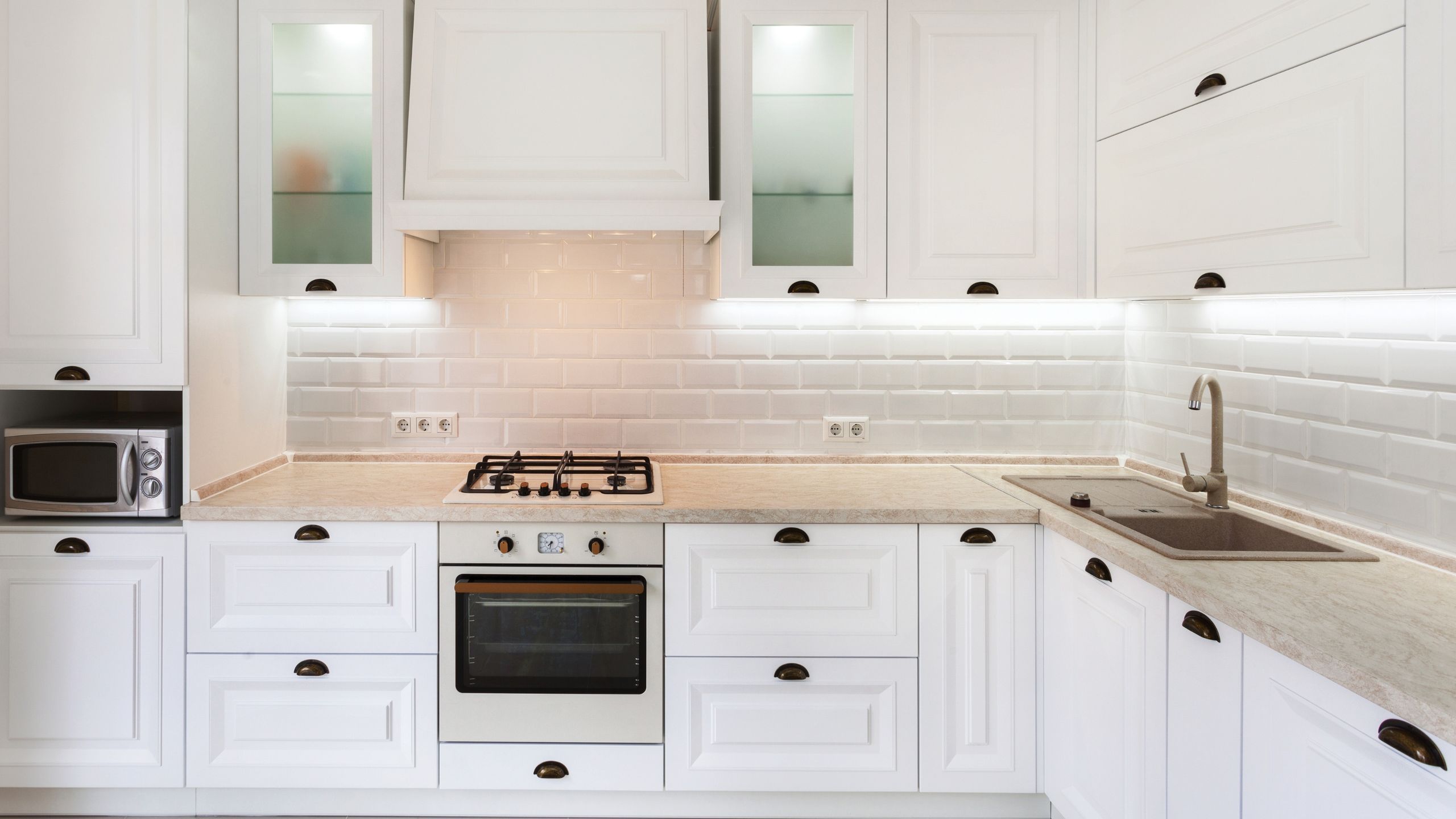
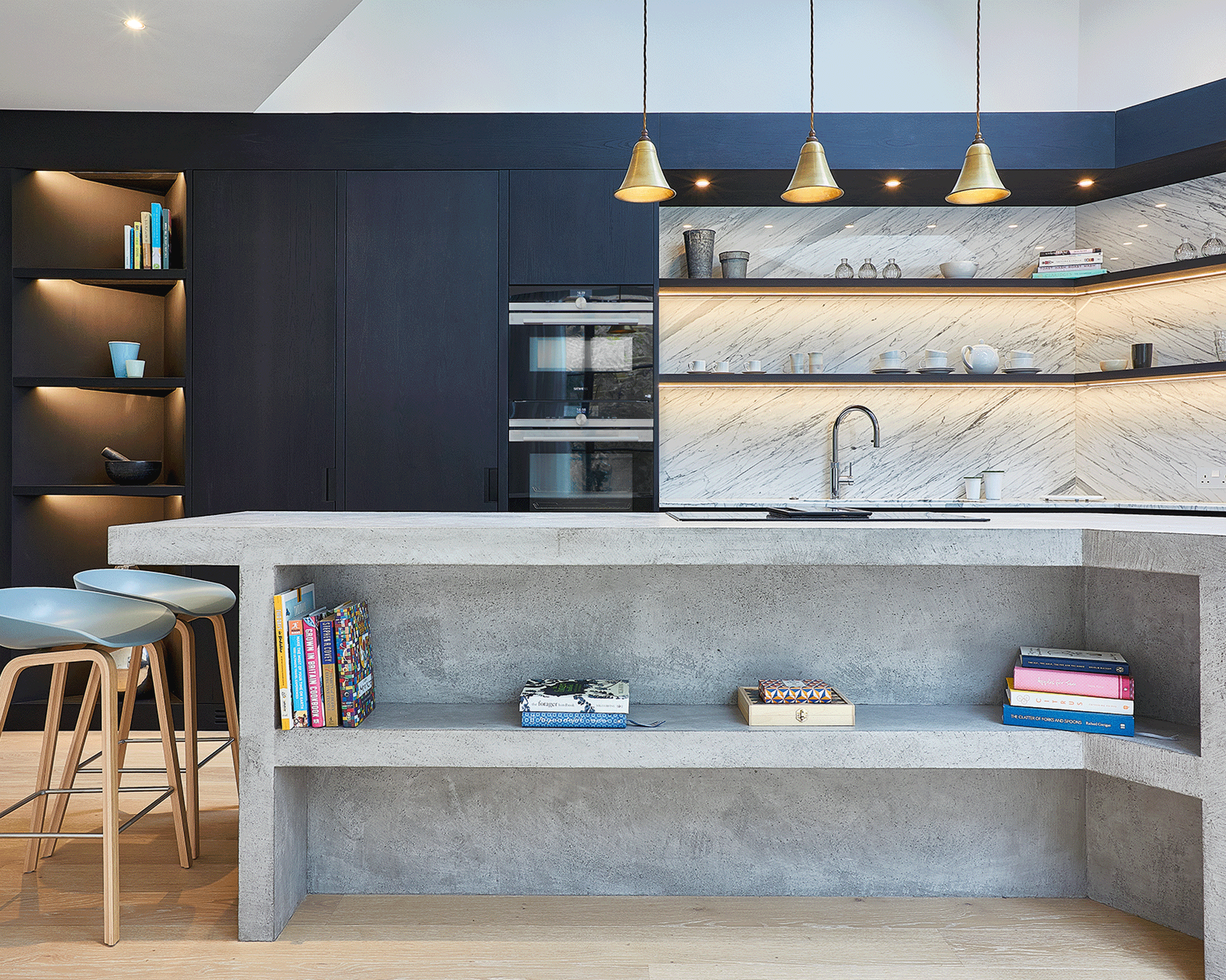
The solution is hidden strip lighting: thin LED strips that can be placed under upper cabinets, along their tops, within shelves, and in toe-kick areas near the floor. The light source is not visible; only the illumination it produces is seen, creating the impression that the cabinetry was designed with integrated lighting.
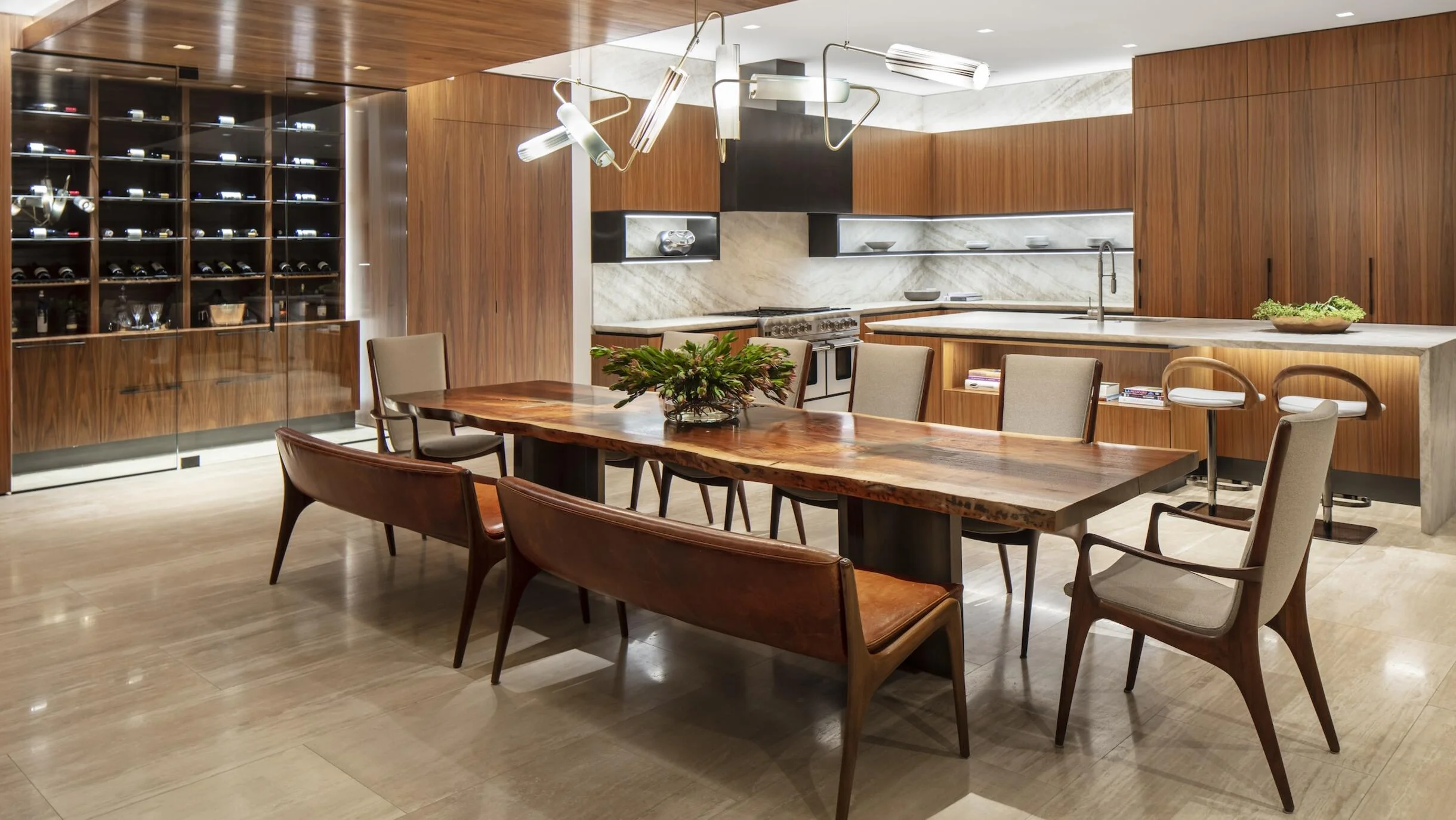
For example, a kitchen without a traditional ceiling can still appear finished by strategically placing lighting. In one instance, light from strips located inside glass cabinets and beneath upper cabinetry creates an expansive feel without an overhead fixture.
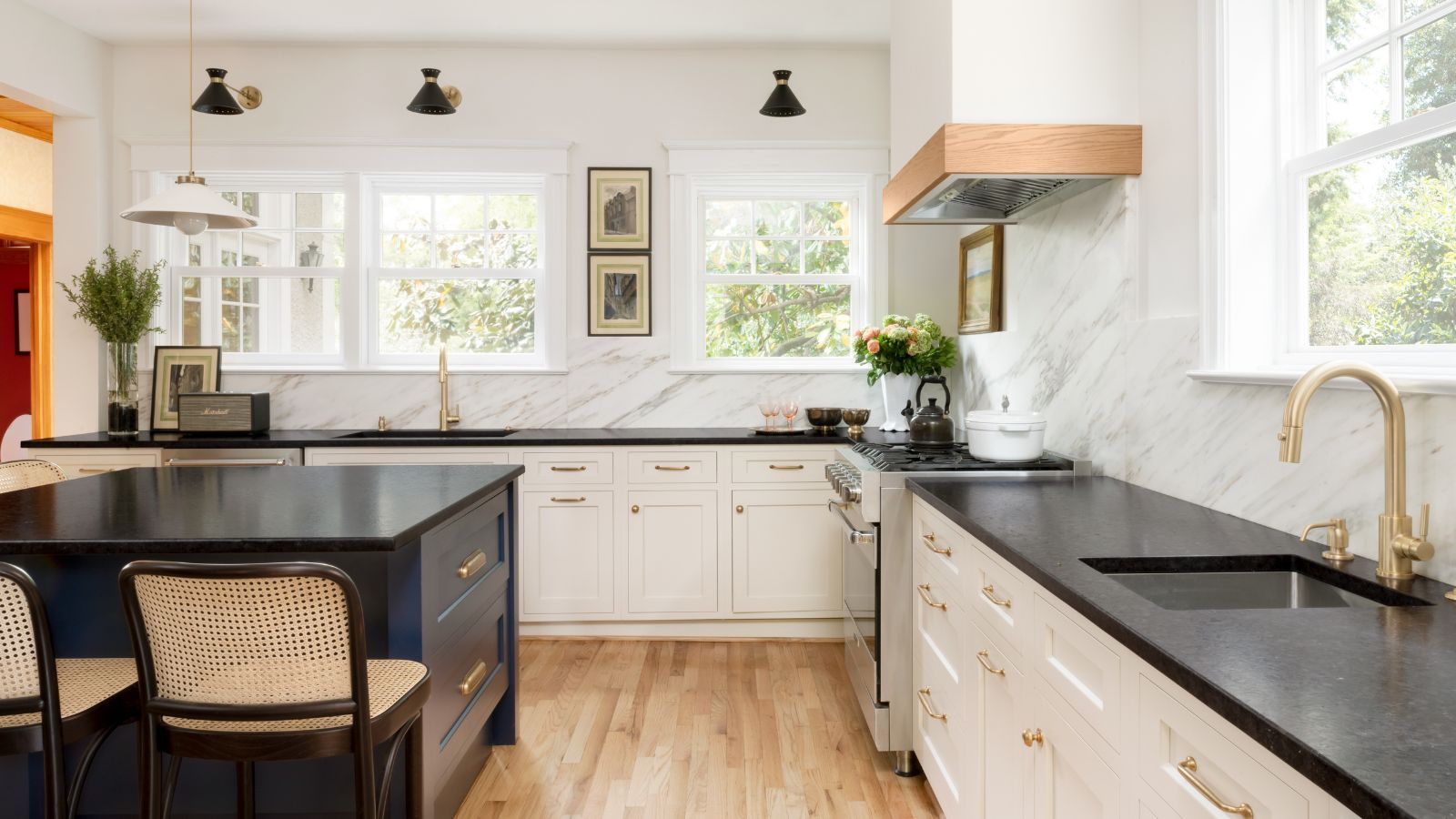
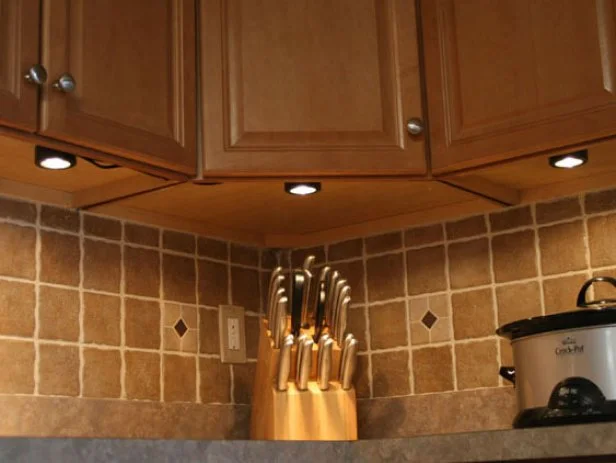
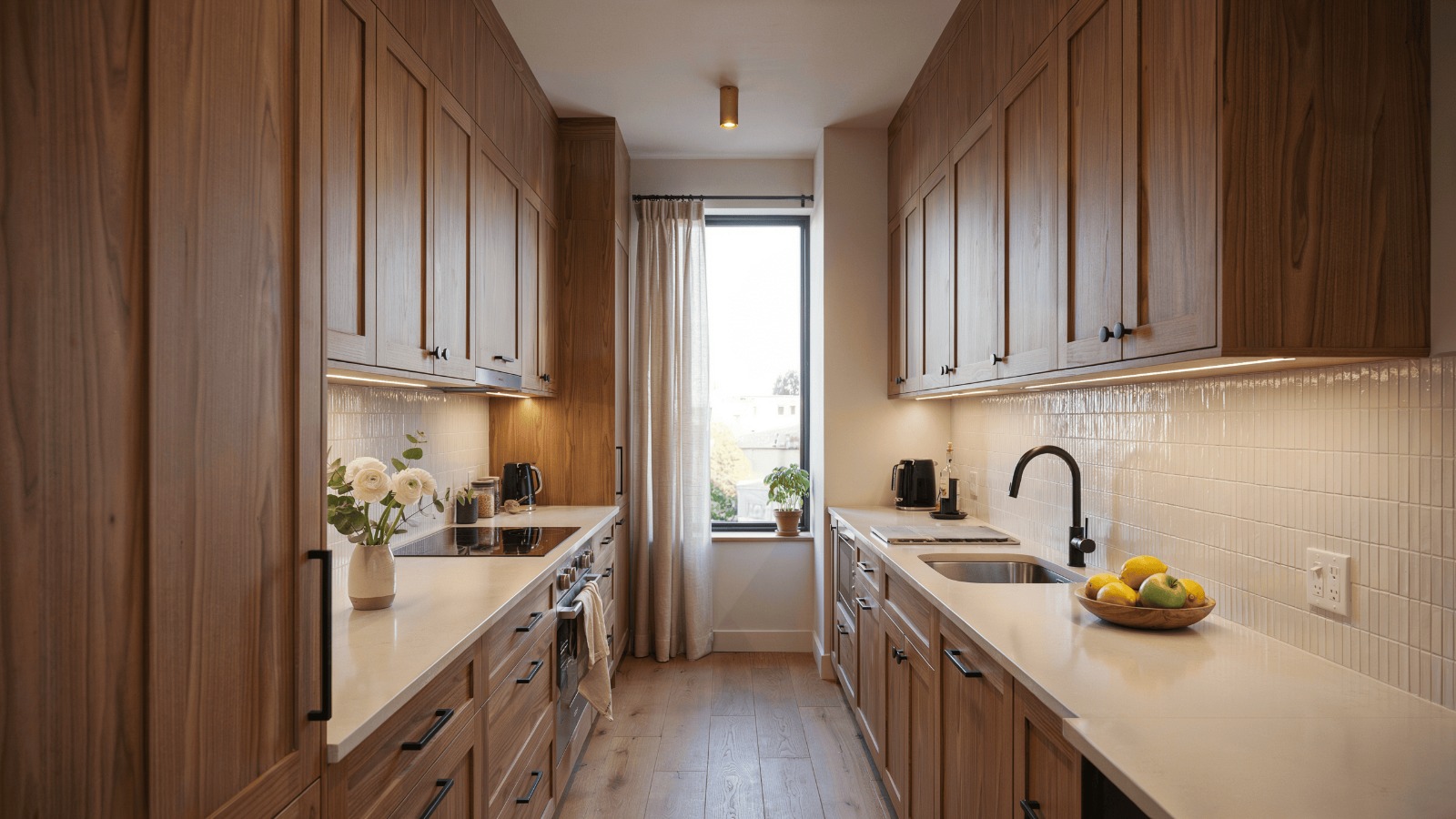
To maximize impact, positioning a strip under the upper cabinets yields the highest effect, illuminating both the backsplash and countertop—the two surfaces most frequently viewed by visitors.
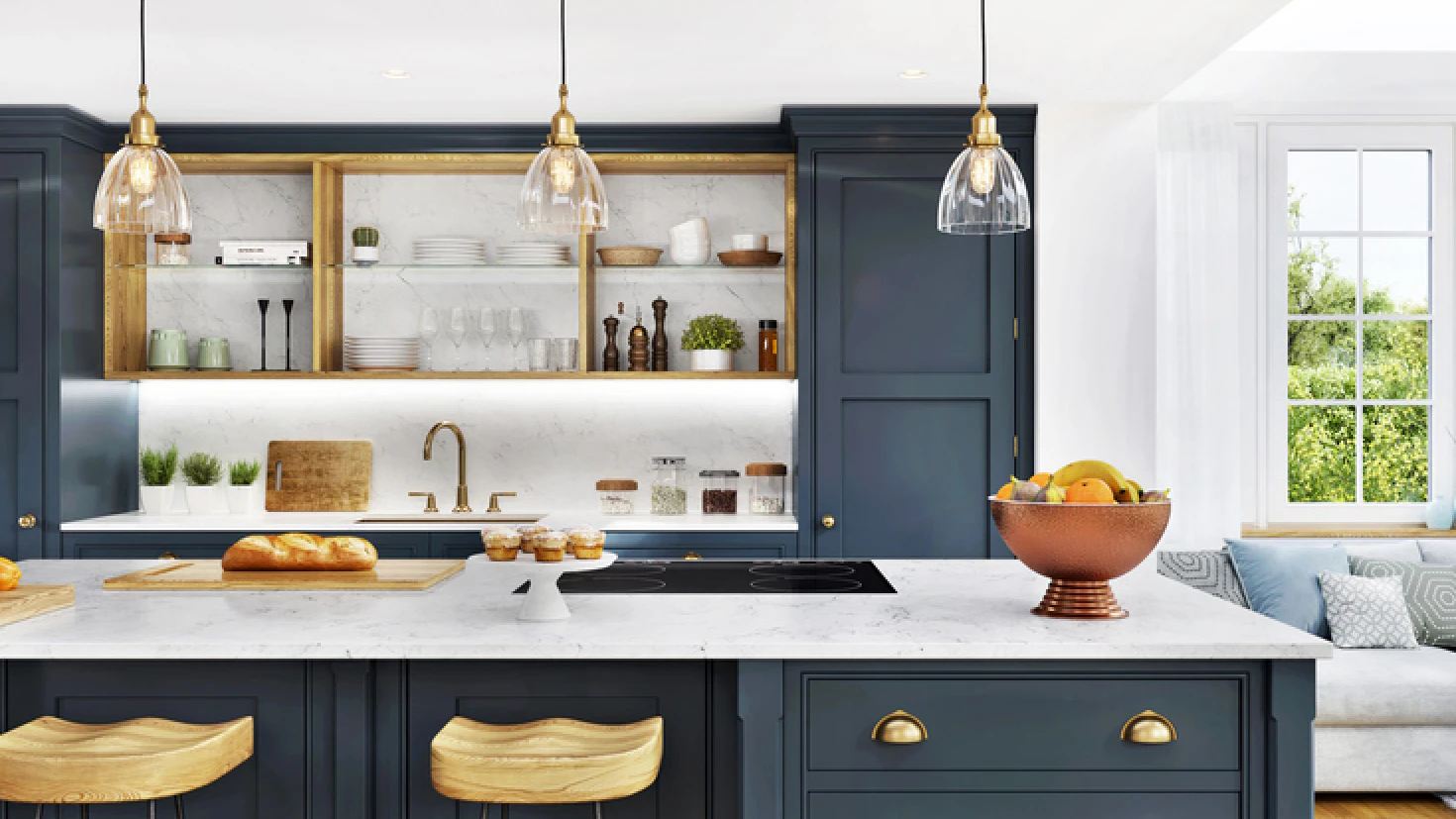
In a different kitchen layout, utilizing strips at three heights creates a dynamic space that avoids the flat appearance common in smaller galley kitchens. This layering facilitates visual depth.
Moreover, a cleverly placed light strip can divert attention from unsightly features like wall-mounted water heaters, drawing focus away and enhancing the overall look of the space.
The color of the strip lighting is also essential; warm white lighting adds a cozy feel while cool tones can create an unappealing hue on wood and food alike. The recommendation is to choose strips in the 2700K to 3000K range.
For renters, peel-and-stick options are available, making it feasible to add stylish upgrades without risking property damage. A simple line of light enhances standard cabinetry greatly.
The under-cabinet strips offer practical benefits too, alleviating the common problem of overhead lights casting shadows on work surfaces. This type of illumination enhances not only the kitchen's aesthetics but also its functionality, making it a worthwhile investment for a few hundred dollars. For those contemplating kitchen upgrades, this lighting technique could be an ideal first step before committing to full cabinet replacements.